
Sensors & Environment
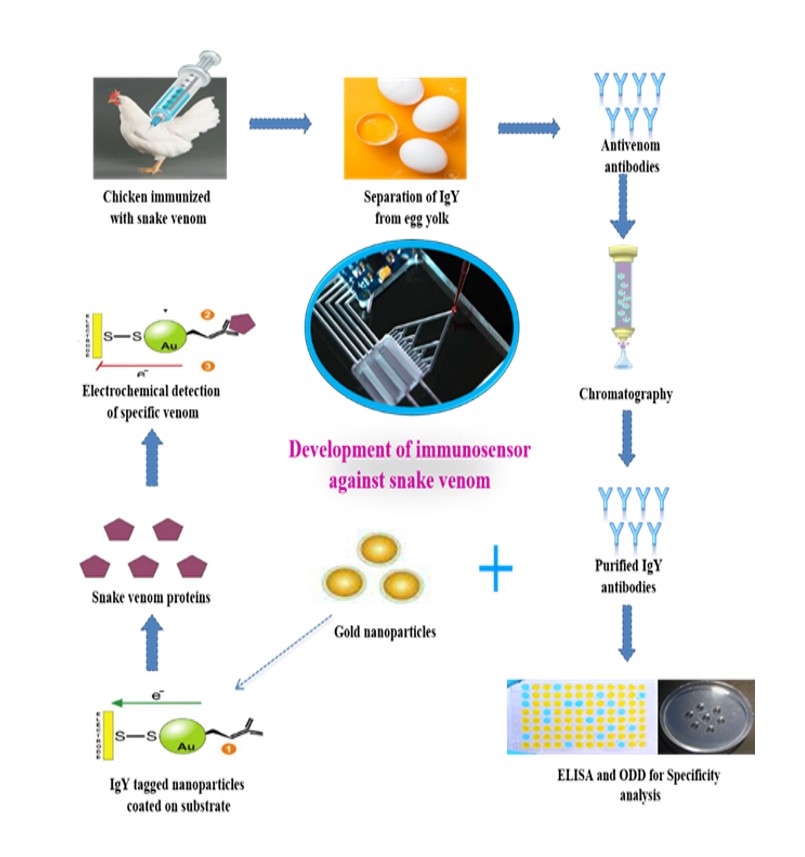
Biosensors for medically related ions, bacterial toxins and venoms
Our group focus on development of nanobased highly sensitive electrochemical and calorimetric kits for various medically related ions like sodium, potassium, magnesium and calcium. We have been successful in integrating IgY antibody to gold nanoparticles for calorimetric detection of big four snake venoms in India like cobra, krait, Russel viper, saw scaled viper. We are using SERS based detection platform detection of bacterial toxins in water and food.
Faculty: Dr. R. Selvakumar (Click here)
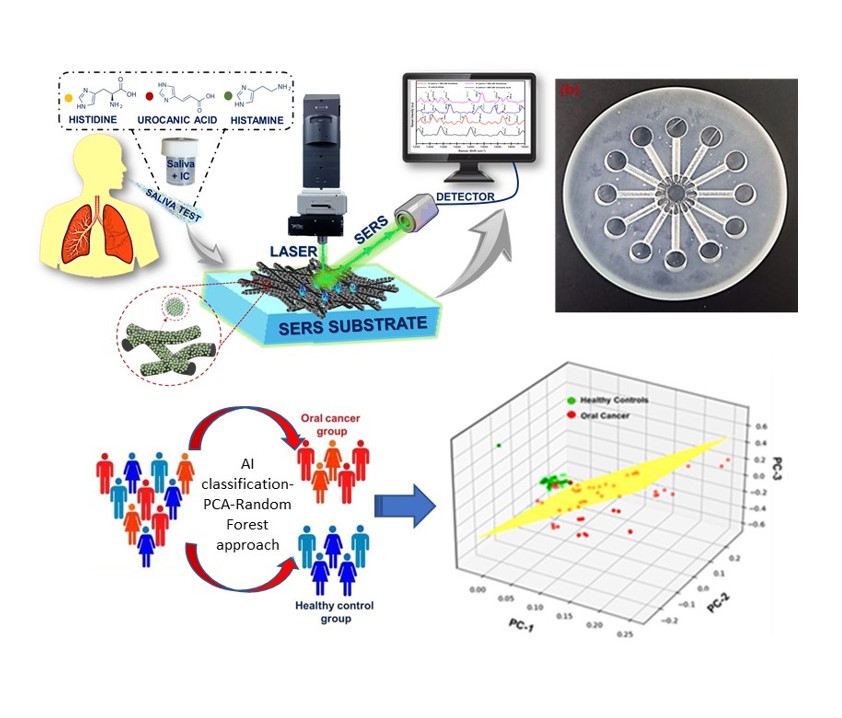
SERS Biosensors for cancer diagnosis
Our research presents a novel Surface-Enhanced Raman Scattering (SERS) biosensor integrated within a 3D-printed microfluidic platform for the detection of salivary biomarkers associated with oral and lung cancers. The sensing interface is engineered using plasmonic nanostructures anchored on carbon nanofibers, which provide high surface area, enhanced charge transfer, and strong electromagnetic field localization for ultrasensitive biomolecular detection. The microfluidic system enables precise sample handling and rapid analysis, while the integration of AI-assisted data processing ensures robust pattern recognition and predictive diagnostics. This synergy of additive manufacturing, nanoplasmonics, and AI-enabled analytics establishes a scalable, non-invasive, and cost-effective diagnostic platform, potentially suitable for pre-diagnosis and mass screening.
Faculty: Dr. P Biji (Click here)
Electrochemical Sensors
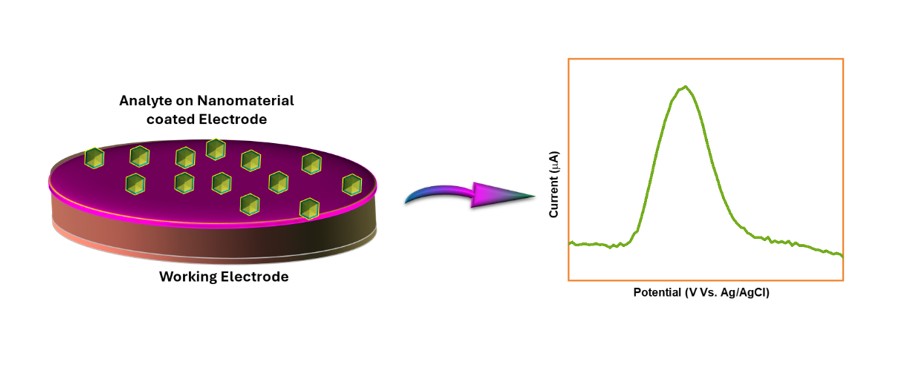
Electrochemical sensors represent a powerful class of analytical tools for healthcare applications, offering high sensitivity and specificity in detecting clinically relevant biomarkers. My research focuses on developing electrochemical sensors for healthcare monitoring, with emphasis on conditions such as diabetes and neurological disorders. The central aim is to design accurate, reliable, and point-of-care diagnostic techniques. To achieve this, I work on engineering nanomaterials and integrating them into electrode systems to enhance sensor performance. My vision is to create low-cost, disposable strip- or paper-based sensors that are user-friendly, highly sensitive, and convenient for real-world healthcare monitoring.
Faculty: Dr. Veena M (Click here)
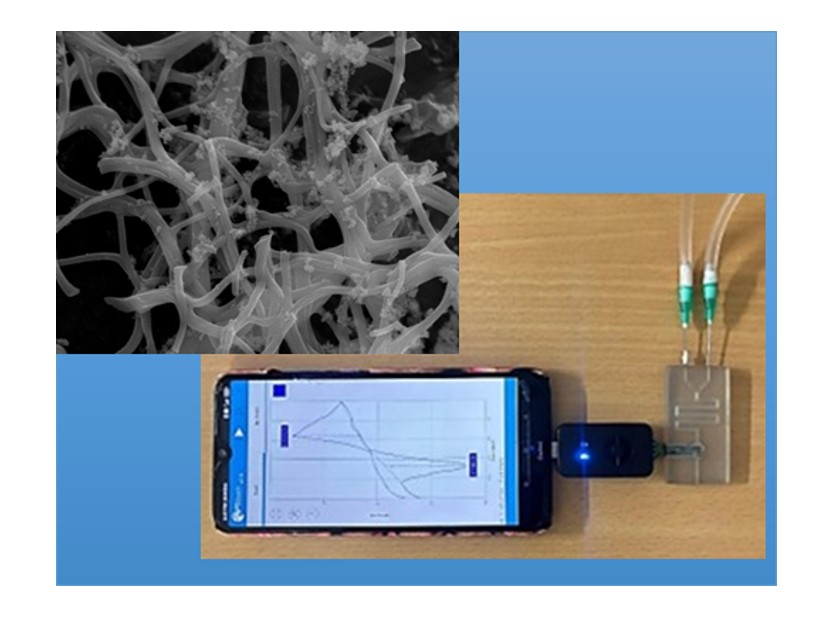
Microfluidic Electrochemical sensor platform for water quality monitoring
We have developed a microfluidic electrochemical sensor platform for real-time monitoring of ammonium ions in recirculating aquaculture systems (RASs). The device is designed to detect trace-level ammonium concentrations below 10 ppm with high sensitivity and reliability, ensuring optimal water quality and fish health. By integrating the electrochemical sensor into a compact microfluidic platform, rapid on-site analysis is enabled with minimal sample volume and reduced operational complexity. Furthermore, the system is coupled with a smartphone interface, allowing wireless data acquisition, visualization, and remote monitoring. This smart, user-friendly technology offers a scalable solution for sustainable aquaculture and efficient water resource management.
Faculty: Dr. P Biji (Click here)
Environmental Remediation
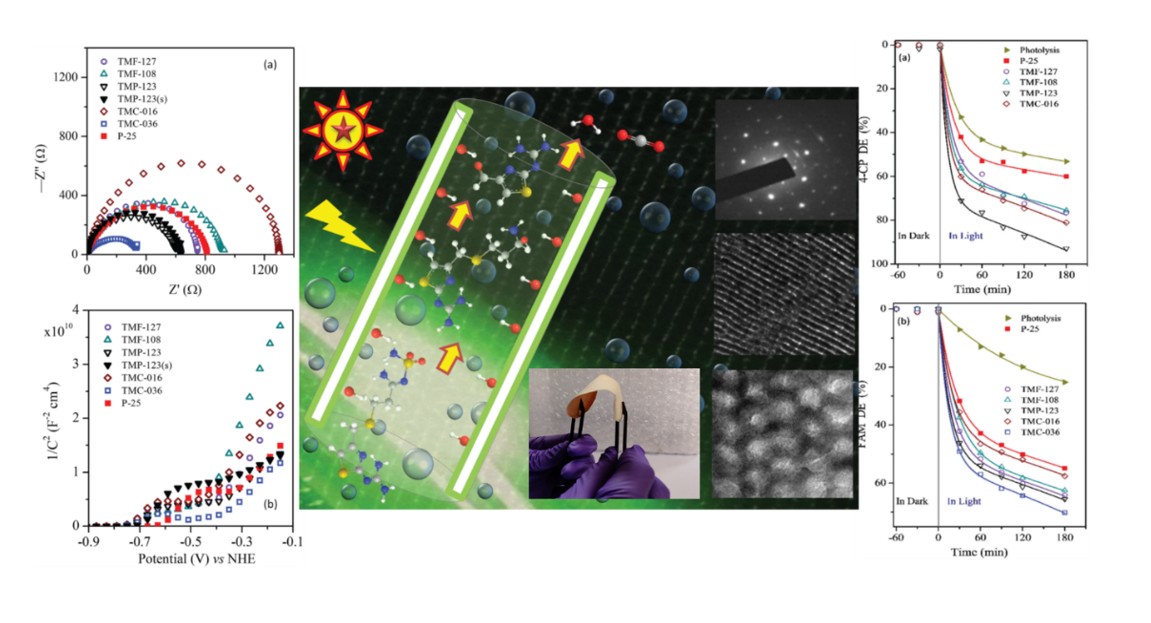
Our environmental remediation research focuses on sustainable solutions for pollutant removal and resource recovery. We develop defective TiO₂-based photocatalysts for efficient photodegradation of hazardous organic drugs and dyes, addressing water contamination challenges. In parallel, we work on metal recovery from industrial and electronic waste, with a particular emphasis on lithium recovery from spent batteries via electrodialysis. To enhance this process, we design and fabricate advanced ion-exchange membranes and polymer inclusion membranes tailored for selective ion transport. These efforts aim to minimize environmental impact while promoting circular economy principles through the integration of waste treatment and resource recycling.
Faculty: Dr. Pavul Raj Rayappan (Click here)
Thin Film Based Gas Sensors
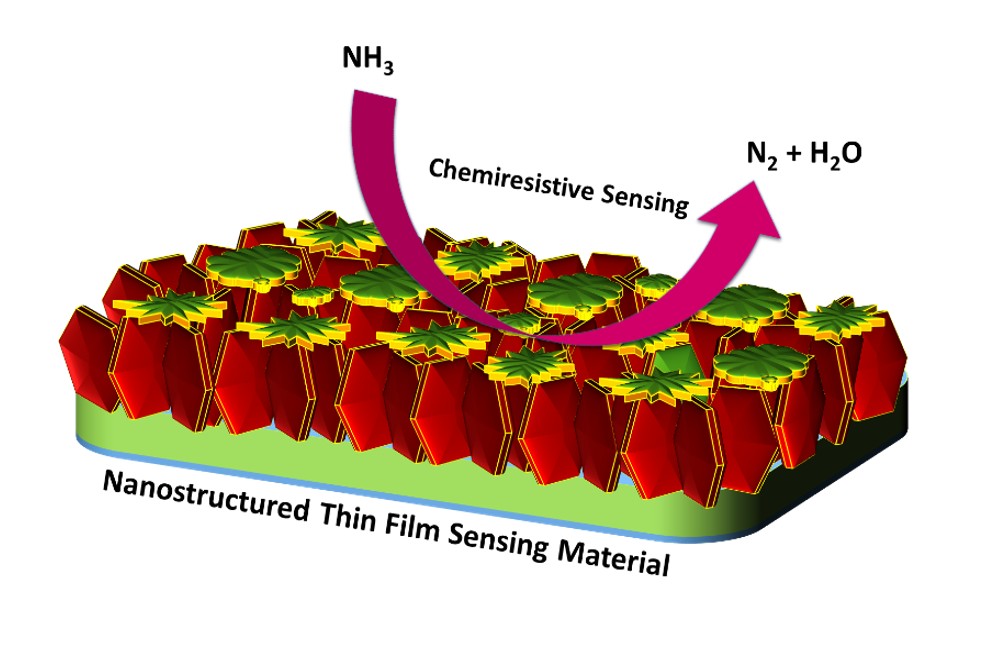
Gas sensors play a vital role in environmental monitoring, enabling early detection of harmful gases and vapors. Among the different approaches, thin-film–based sensors are particularly attractive for research-to-technology transfer due to their high compatibility with device fabrication processes. Physical vapor deposition (PVD) techniques allow the development of thin films with excellent repeatability and reproducibility, which are crucial for reliable sensing performance. My research focuses on the development of thin-film–based metal oxide sensors for environmental monitoring, where I am particularly interested in addressing the challenges of sensing vapors under diverse environmental conditions and advancing the design of point-of-care devices. These devices aim to integrate smart features such as alarms and mobile phone–based signaling systems, making them highly practical for real-world applications.
Faculty: Dr. Veena M (Click here)
Gas Sensors for Environmental Monitoring and Biomedical Applications
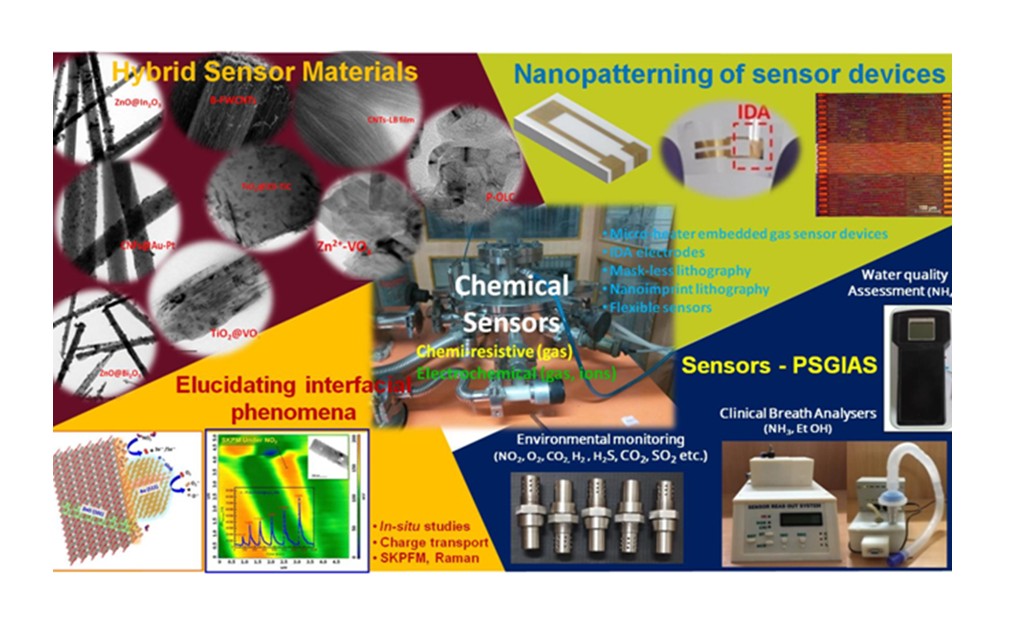
Our research focuses on developing sustainable gas sensors for environmental monitoring and biomedical applications. We design nanoscale heterojunction materials based on metal oxide semiconductors and carbon nanostructures to achieve high selectivity toward toxic gases (NO₂, NH₃, H₂, CO₂, H₂S, SO₂) at low operating temperatures. Using in-situ probe microscopy and Raman spectroscopy, we study sensing mechanisms, while device fabrication employs mask-less lithography and vapor deposition techniques. Innovations include temperature-independent oxygen sensors using VOₓ nanosystems to reduce thermal drift, and cost-effective hydrogen sensors with low-Pt catalysts. These nanosensors have potential in pollution control, safety monitoring, leakage detection, and biomedical fields.
Faculty: Dr. P Biji (Click here)
Integrated nano and biotechnology for Environmental remediation and water treatment
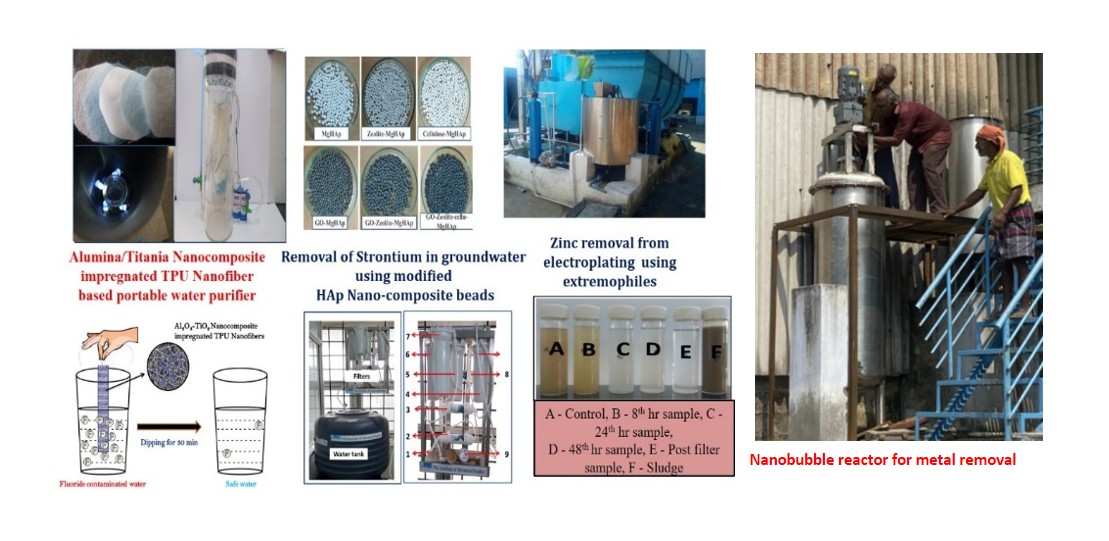
The group focuses on developing an integrated nanotechnology and bio based concepts for treatment of domestic and industrial wastewater and effluents. We have successfully developed 2D electrospun nanofiber membranes impregnated with catalytically active nanomaterials for adsorption of various emerging contaminants, radioactive compounds, and metal/metalloids from wastewater and effluents. Indigenous nanobubble technology foe electroplating effluent treatment has been successfully demonstrated at Industrial Scale. Extremophile microbes capable of surviving extreme conditions have been explored for its ability to sequester contaminants from contaminated water and soil samples in real-time. Use of bacteriophage and carrier development for delivery of these phage’s for mitigation of antimicrobial resistance has been actively pursued.
Faculty: Dr. R. Selvakumar (Click here)
Critical metal extraction from primary and secondary ore using integrated nanobio approach
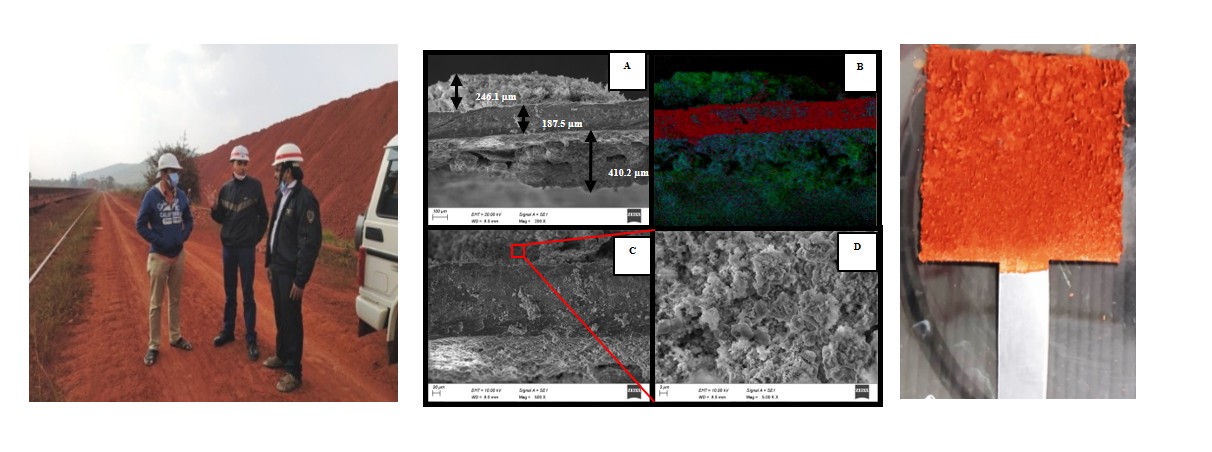
Our group is working extensively on developed of integrated nanobio concepts for extraction of critical metals from primary and secondary sources using extremophilic bacterial species capable of leaching critical metals from primary and secondary ores like uranium ore and redmud. We have optimised a bio-electrochemical and 2D nanosorbents from natural polysaccharides derived from seaweed which has higher adsorption potential towards the critical metals leached from secondary sources.
Faculty: Dr. R. Selvakumar (Click here)
Anaerobic digestion
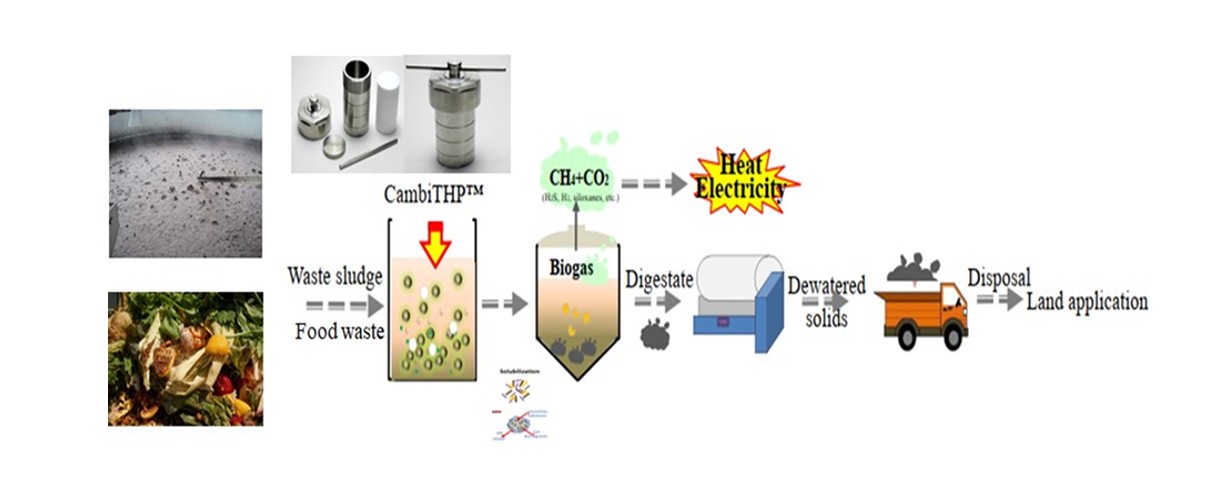
The impact of thermal hydrolysis pretreatment on food waste at varying temperature levels (90 °C, 120 °C, and 140 °C) prior to mesophilic anaerobic co-digestion with sewage sludge experiment. Results demonstrate enhanced food waste (FW) hydrolysis at 120 °C, leading to a cumulative methane yield of 324.39± 4.5 mL/ gVSadd, representing a 41.75 % increase over untreated FW (228.83± 1.13 mL/gVSadd). Shifts in microbial communities, particularly Methanosarcina, Methanobactrium, and Methanobrevibacter, support efficient methanogenesis. Co-digestion of FW pretreated at 120 °C yields maximum energy production of 11.48 MJ/t, a 49.47% improvement compared to untreated processes. The economic analysis underscores the profitability of co-digestion with FW pretreated at 120°C. These findings highlight the potential for enhanced methane production and energy conversion efficiency with hydrothermally pretreated FW and SS co-digestion.
Faculty: Dr. D Johnravindar (Click here)
Chemosensors
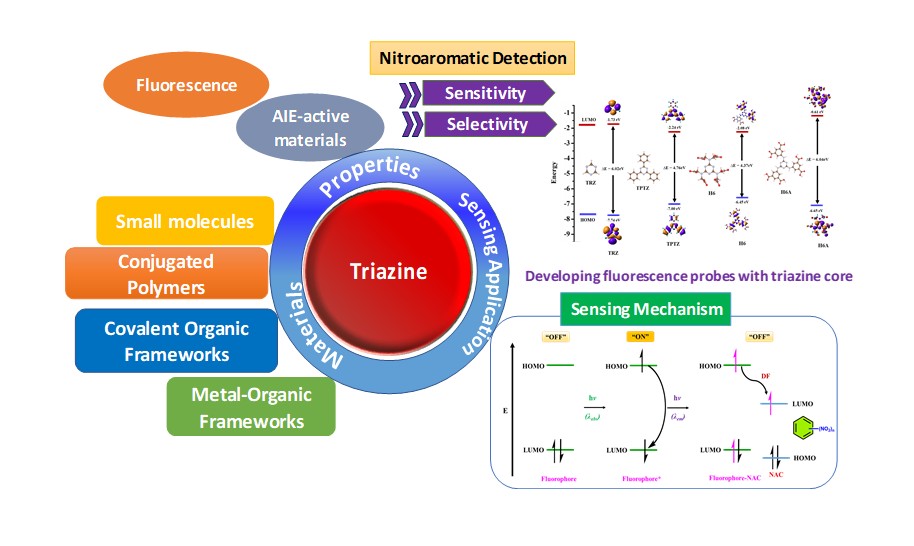
We focus on developing novel fluorescent ligands and materials for metal ion sensing and nitroaromatic or metal ion detection. Our research aims to create highly selective and sensitive chemosensors with applications in environmental monitoring and biological systems.
Faculty: Dr. G Sathiyan (Click here)
Fluorometric Sensors
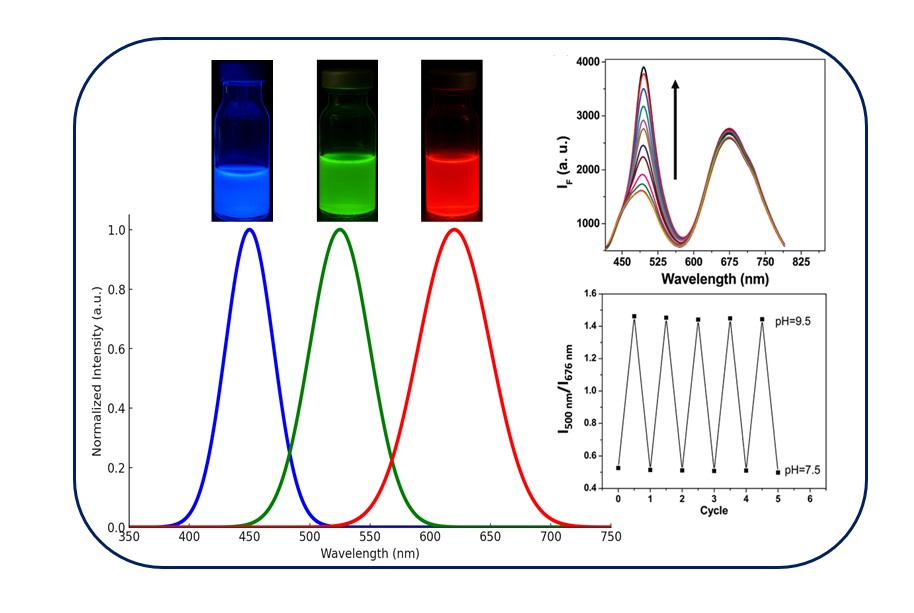
My research expertise focuses on the design and development of fluorometric sensors for highly sensitive and selective detection of analytes in biomedical and environmental applications. I work on engineering novel fluorescent nanomaterials, including atomically precise metal nanoclusters and biopolymer-based hybrids, with tunable emission properties and strong signal responsiveness. By exploiting fluorescence intensity, ratiometric, and lifetime-based sensing strategies, these sensors are capable of detecting trace levels of ions, biomolecules and pollutants. My work emphasizes biocompatibility, stability and portability, aiming to create cost-effective, rapid, and reliable fluorometric sensing platforms for real-time diagnostic and monitoring applications.
Faculty: Dr. S. Chandirasekar (Click here)
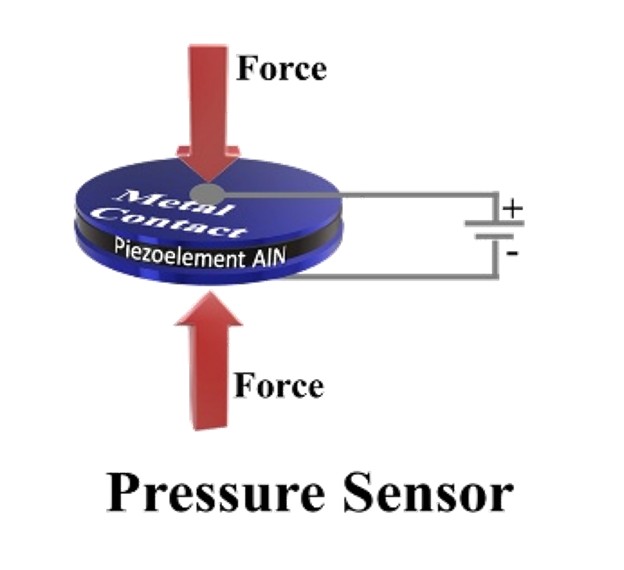
Pressure Sensors
This research involves the design and fabrication of thin-film pressure sensors using sputtering techniques. By utilizing Group III–V semiconductor materials, the work aims to achieve extreme operating environments, making them highly suitable for space applications.
Faculty: Dr. Atheek P (Click here)