
Healthcare
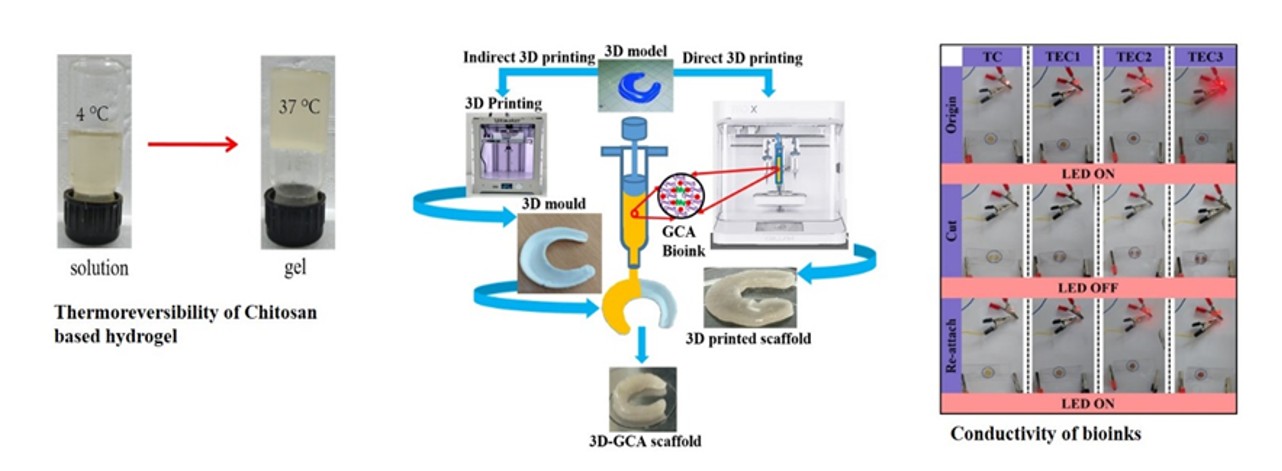
2D and 3D printing/bio printing for tissue engineering applications
We have successfully developed biomolecule cocktail that can promote primary cells proliferations especially for Human primary meniscal cells harvested from patients undergoing meniscetomy. We have incorporated them in 2D nanofibers and 3D bioprinted scaffolds for enabling enhanced cellular proliferation and attachment. Similar scaffold and bioinks have been prepared for human endometrial stromal cell proliferation. Recently we have successfully developed an electrically conductive bioinks for improving cell to cell communications in 3D bio printed scaffolds for neuron and cartilage cells.
Faculty: Dr. R. Selvakumar (Click here)
Systemic Toxicity Profiling
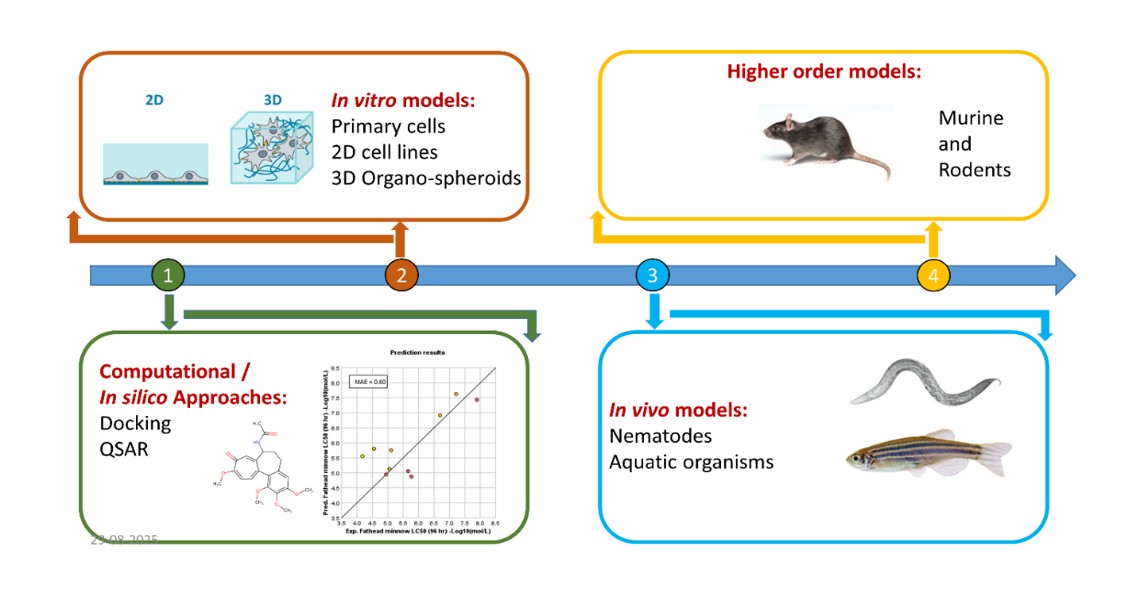
Systemic toxicity profiling of any material/chemical is essential in understanding their hazardous nature to be used in biomedical applications or disposed scientifically. Our lab works on molecular toxicity/efficacy assessments using computational, in vitro and in vivo models. The profiling includes nervous, developmental, reproductive, hepatic, cardiac, excretory, metabolic, immune, and circulatory using morphological, behavioural, biochemical, genetic and ultra-structural analysis.
Faculty: Dr. Vasanth Dhakshinamoorthy (Click here)
Luminescent Metal Nanoclusters for Bioimaging Applications
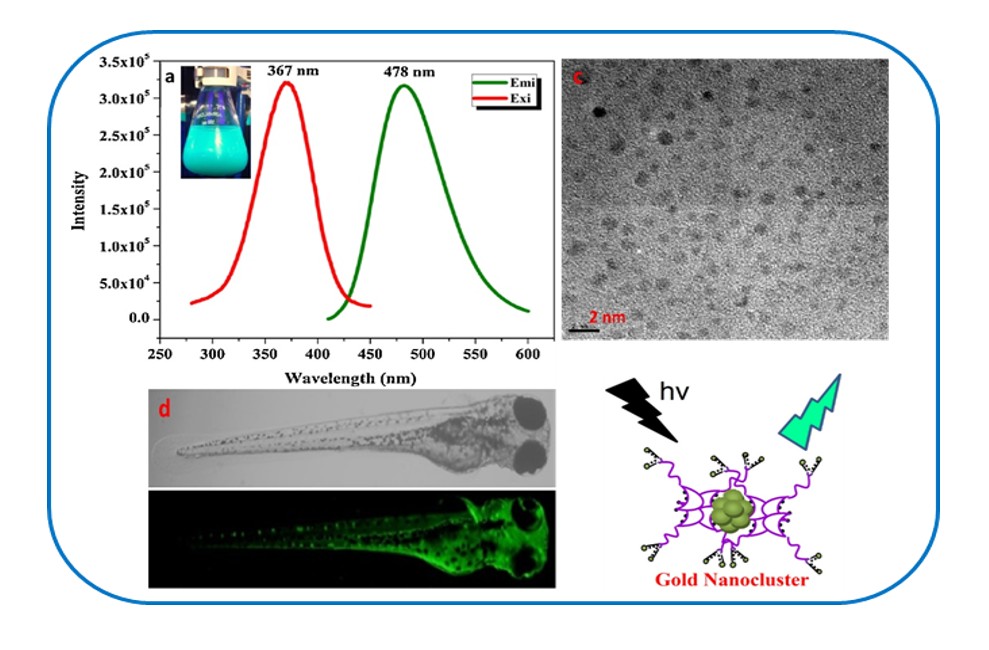
Our research group focuses on developing new atomically precise fluorescent noble metal nanoclusters (MNCs) for in vitro and in vivo bioimaging and fluorometric sensing applications. Metal nanoclusters composed of tens to hundreds of atoms with a size of less than 2 nm. In this size regime, the collective oscillation of conduction band electrons of their larger nanoparticle breaks into discrete energy levels, which leads to the size-dependent fluorescence properties from UV to near-IR region. Fluorescent NCs generally exhibit excellent photostability, meaning that they can sustain their fluorescence intensity for a prolonged period without significant photobleaching. This property is particularly advantageous for long-term imaging applications. Fluorescent MNCs have small sizes in the range of a few nanometers, which allows for efficient cellular uptake and intracellular distribution.
Faculty: Dr. S. Chandirasekar (Click here)
Biopolymeric Micellar Drug Delivery Systems
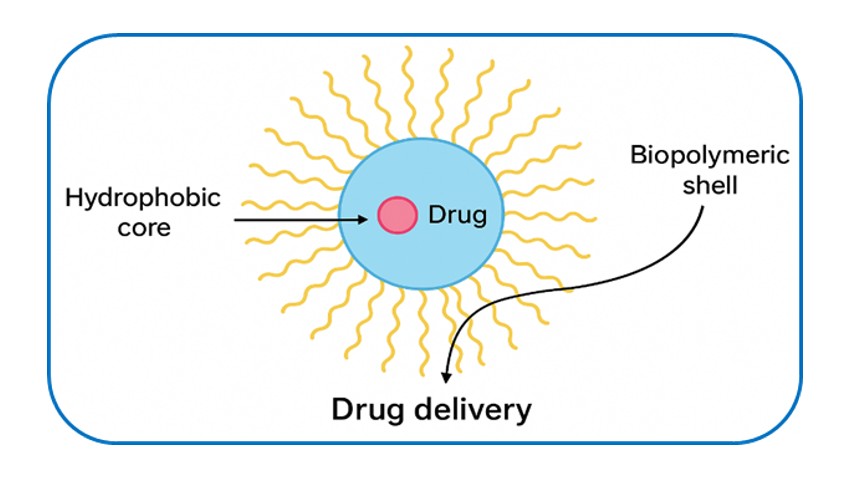
My research expertise focuses on the design and development of biopolymeric micellar systems for mucoadhesive drug delivery. I work on engineering stimuli-responsive, biodegradable micelles from natural and modified biopolymers to improve the solubility, stability, and bioavailability of poorly water-soluble drugs. These micellar carriers are tailored for strong mucosal adhesion, enabling prolonged residence time at the target site and controlled release of therapeutic agents. By integrating surface modifications and functionalization strategies, I aim to enhance drug targeting, reduce systemic side effects, and achieve site-specific delivery for oral, nasal, and gastrointestinal applications in both therapeutic and diagnostic contexts.
Faculty: Dr. S. Chandirasekar (Click here)
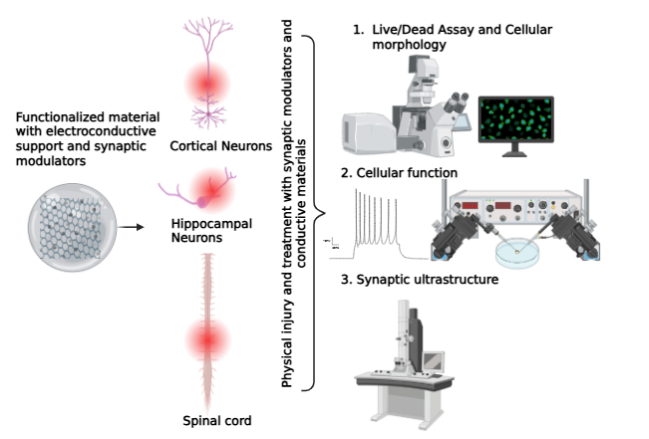
Restoring Neuronal Connectivity and Function after Traumatic Injury Smart Platforms
Injuries to the central nervous system (CNS), including spinal cord injury, traumatic brain injury and neurodegenerative conditions, frequently result in irreversible damage due to axonal degeneration, disrupted neural connectivity, and demyelination. Current therapeutic interventions yield limited functional recovery, leading to permanent neurological deficits. Our lab’s research aims to preserve and restore neuronal function by providing conductive and structural support to existing neurons and by minimizing secondary injury and degeneration through the use of synaptic modulators and smart bioengineered platforms. To address these goals, we employ a combination of primary and secondary neuronal culture systems, electrophysiological assessments, and synaptic ultrastructural analyses. The long-term objective of this work is to promote neuronal repair and functional recovery following CNS trauma, thereby advancing therapeutic strategies for neuroregeneration and rehabilitation.
Faculty: Dr. Priyadharishini Veeraraghavan (Click here)